Abs Not Showing? 9 Reasons Your Six Pack Isn't Visible Yet
Your abs are there — but are they showing? Discover the 9 real reasons your six pack isn't visible yet and what to do about it.

Your abs are a muscle group like any other — they exist right now under your skin. The reason they aren't showing has nothing to do with genetics and everything to do with a few fixable factors. If you've been training consistently but your six pack still isn't visible, one or more of these nine reasons is holding you back.
1. Your Body Fat Is Still Too High
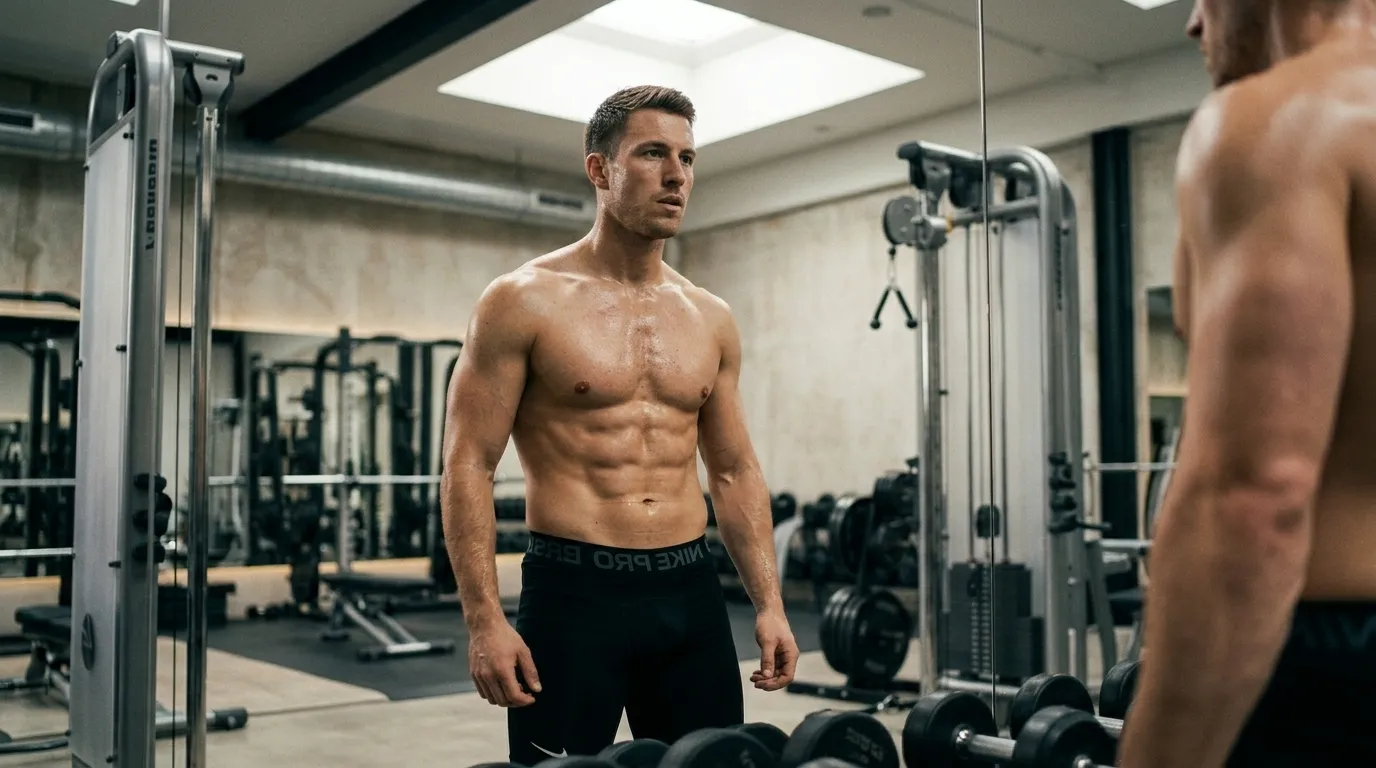
This is the number one reason. Abs become visible at roughly 10–13% body fat for most men. Above that threshold, subcutaneous fat sits directly over the rectus abdominis and hides every definition line regardless of how strong or developed your abs are.
You cannot spot-reduce belly fat. The only path is a consistent caloric deficit over time combined with training. There are no shortcuts around this physiological reality.
2. You're Eating in a Surplus Without Realizing It
Most men who struggle to lean out are eating more than they think. Liquid calories, sauces, cooking oils, and weekend meals can easily erase a weekday deficit. Tracking your food intake accurately — even for two weeks — is often enough to identify where the excess is coming from.
A consistent 300–500 calorie daily deficit is the sustainable range for fat loss while preserving muscle mass. Anything more aggressive increases the risk of muscle breakdown.
3. Your Protein Intake Is Too Low
Protein does two critical jobs during a cut: it preserves lean muscle and it keeps you fuller longer. Men aiming for visible abs should target 0.8–1g of protein per pound of bodyweight daily. Falling short accelerates muscle loss and slows your metabolism.
High-protein foods to prioritize include:
Chicken breast and turkey
Eggs and egg whites
Greek yogurt and cottage cheese
Lean beef and fish (especially salmon and tuna)
Whey or casein protein supplements
4. You're Not Training Abs With Progressive Overload
Endless crunches and planks do not build thick, well-developed abs. Like every muscle, the core responds to progressive overload — adding resistance, increasing reps, or increasing time under tension over time. Without this, your abs stay flat and underdeveloped even at lower body fat.
Effective ab exercises to load progressively include:
Cable crunches: 3–4 sets of 12–15 reps with added weight
Hanging leg raises: 3 sets of 10–12 reps
Weighted decline sit-ups: 3 sets of 10 reps
Ab wheel rollouts: 3 sets progressing to full rollouts

5. Your Cardio Strategy Is Off
Neither too much nor too little cardio serves you well. Excessive cardio without adequate nutrition breaks down muscle tissue. Too little cardio makes it hard to maintain the caloric deficit needed for fat loss. A balanced approach works best for most men.
An effective cardio protocol for revealing abs:
2–3 sessions of low-intensity steady-state (LISS) cardio per week: 30–45 minutes of walking or incline treadmill
1–2 sessions of HIIT per week: 15–20 minutes of sprint intervals
Always prioritize resistance training — cardio is secondary
6. Water Retention Is Masking Your Definition
High sodium intake, processed foods, insufficient water consumption, and high stress levels all cause the body to retain water. This retention sits under the skin and blurs muscle definition even when body fat is low. You can be lean and still look soft due to chronic water retention.
To reduce water retention naturally, focus on: drinking 3–4 liters of water daily, limiting processed and high-sodium foods, managing cortisol through sleep and stress reduction, and increasing potassium-rich foods like bananas and sweet potatoes.
7. Your Sleep Is Sabotaging Your Fat Loss
Poor sleep elevates cortisol and suppresses testosterone — a hormonal combination that directly promotes fat storage around the midsection. Studies consistently show that men sleeping under 6 hours per night lose significantly less fat compared to those sleeping 7–9 hours, even under the same diet conditions.
Prioritizing 7–9 hours of quality sleep is not optional when your goal is a visible six pack. Sleep is when testosterone peaks, muscle repairs, and cortisol resets.
8. You're Not Being Consistent Enough
Six pack abs are built over months, not weeks. Many men are consistent for 3–4 weeks, see slow progress, and abandon their approach before results arrive. The compound effect of sustained effort is what separates men with visible abs from those who perpetually chase them.
A realistic timeline for most men starting above 20% body fat is 4–8 months of consistent training and nutrition. Men starting closer to 15% body fat can expect visible abs in 8–16 weeks of disciplined effort.
9. Your Ab Muscles Are Underdeveloped
Even at low body fat, men who have never specifically trained their abs with resistance will lack the muscle thickness needed for deep definition lines. The rectus abdominis needs to be built like any other muscle group. Visible striations and block-like abs require both low body fat and significant muscle development.
Train abs 2–3 times per week with dedicated resistance work in addition to compound lifts like squats and deadlifts, which engage the core heavily under load.
The Action Plan: What to Do Starting Now
Address all nine factors simultaneously and your progress will accelerate. Here is the practical checklist:
Track your calories for two weeks and confirm you are in a 300–500 calorie daily deficit
Hit 0.8–1g of protein per pound of bodyweight every day
Train abs 2–3 times per week with weighted exercises and progressive overload
Add 2–3 LISS cardio sessions per week and one HIIT session
Reduce sodium and processed food intake to minimize water retention
Sleep 7–9 hours per night consistently
Commit to at least 8–12 weeks before evaluating results
Every man who has a visible six pack solved the same nine problems. The process is not complicated — but it demands sustained, honest execution.
FAQ
At what body fat percentage do abs become visible?
How long does it take to get a six pack?
Do I need to do ab exercises every day to see results?
Why are my abs visible in the morning but disappear later in the day?
Can stress really prevent abs from showing?
Related Intel
View All
Skinny Guy Bulking Guide (Step-by-Step).
A practical step-by-step bulking plan for skinny men who want to build real muscle size without gaining unnecessary fat.

Why Your Abs Aren’t Showing (And How to Fix It)
Uncover the real reasons your abs are hidden and learn the practical steps to reveal them.

Common Gym Mistakes That Sabotage Your Results
Stop wasting your time and effort by avoiding these critical gym mistakes that are keeping you from building the physique you want.