Beginner Gym Guide: What to Do on Your First Day
Stepping into the gym for the first time? This beginner gym guide covers exactly what to do on day one to build confidence, move right, and start strong.
Beginner Gym Guide: What to Do on Your First Day
Your first day at the gym sets the tone for everything that follows — your habits, your confidence, and your long-term results. Walking in with a clear plan instead of wandering around is the single biggest advantage a beginner can have. This guide gives you exactly that — a step-by-step breakdown of what to do, what to focus on, and how to leave feeling like you actually belong there.
Why Your First Gym Session Matters More Than You Think
Most beginners either go too hard and burn out, or show up with no direction and waste the session. Neither builds the habit or the physique you're after. Day one isn't about proving yourself — it's about building the foundation that every future session stands on. Learn the movements, understand the environment, and leave wanting to come back. That's the win on day one.
What to Bring to the Gym on Day One
Keep it simple. You don't need a bag full of supplements and gear to get started. Here's what actually matters:
Athletic shoes with flat or minimal heel drop: Running shoes are fine to start. Avoid bulky cushioned soles for lifting — they reduce stability.
Water bottle: Hydration directly affects your energy and performance. Bring at least 750ml.
Workout clothes you can move freely in: Shorts or joggers, a fitted tee or tank. Comfort and range of motion over everything.
A small towel: Gym etiquette 101. Wipe down equipment after use.
Headphones: Optional but useful — the right playlist locks you in and cuts out distractions.

How to Warm Up Before You Lift
Skipping the warm-up is the fastest way to get injured in the gym. A proper warm-up raises your core temperature, primes your nervous system, and improves the quality of every rep you do in the session. Keep it to 8–10 minutes and don't overcomplicate it.
5 minutes light cardio — treadmill walk, bike, or row. Get blood moving and body temperature up.
Arm circles — 10 forward, 10 backward. Loosens shoulder joints before any pressing.
Hip circles and leg swings — 10 reps each side. Opens up the hips before squatting or lower body work.
Bodyweight squats — 2 sets of 10. Activates glutes and quads, rehearses the squat pattern with zero load.
Push-ups — 1 set of 10. Activates chest, shoulders, and triceps before pressing movements.
What to Do on Your First Day at the Gym: The Workout
Day one should be a full-body session focused entirely on learning fundamental movement patterns with light weight. The goal isn't to go heavy or go to failure — it's to move correctly and build the neural pathways that make future training more effective. Soreness will come regardless. Control the load.
The 5 Movement Patterns Every Beginner Needs
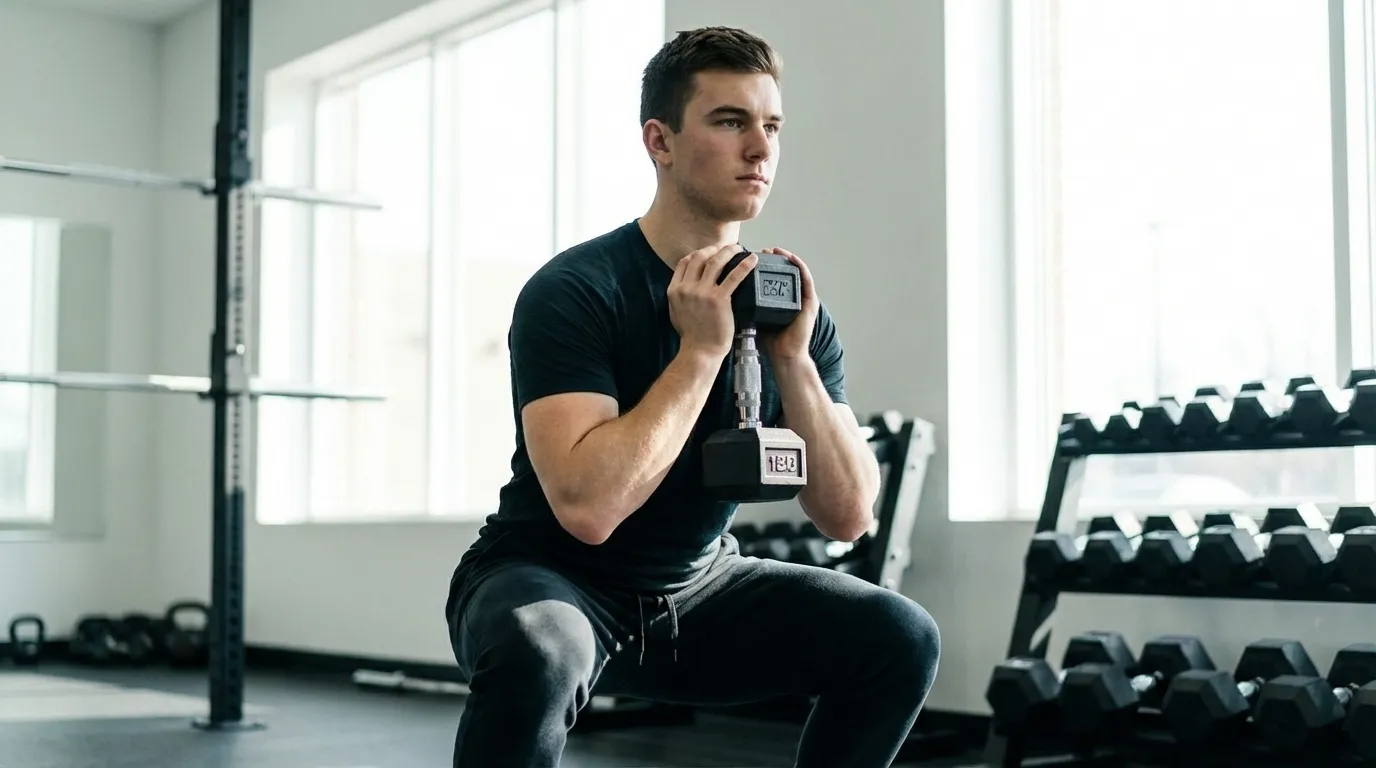
Squat: The most fundamental lower body pattern. Builds quads, glutes, and overall athletic strength. Start with bodyweight or goblet squat.
Hip Hinge: Trains your posterior chain — hamstrings, glutes, lower back. The Romanian deadlift (RDL) is the best entry-level hinge movement.
Push: Horizontal pushing trains the chest, front delts, and triceps. Start with the dumbbell bench press or machine chest press.
Pull: Pulling movements build your back and biceps. The cable lat pulldown or assisted pull-up machine is perfect for beginners.
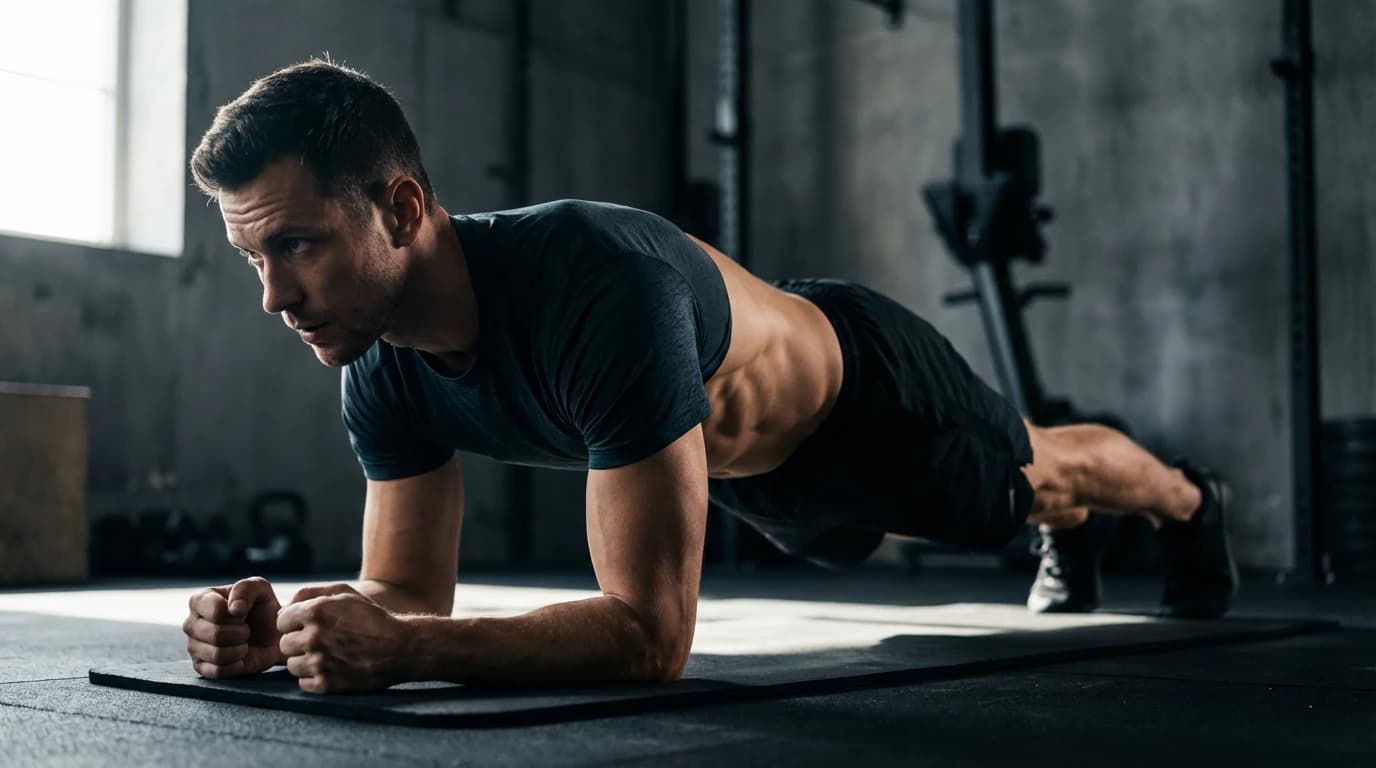
Core Brace: Learning to brace your core protects your spine under load. The plank teaches this pattern directly. Every beginner needs it.
Day One Full-Body Workout for Beginners
Goblet Squat — 3 sets x 10 reps (light dumbbell, focus on depth and posture)
Dumbbell Romanian Deadlift — 3 sets x 10 reps (hinge at hips, soft knee bend, neutral spine)
Machine Chest Press or Dumbbell Bench Press — 3 sets x 10 reps (controlled tempo, full range)
Cable Lat Pulldown — 3 sets x 10 reps (pull to upper chest, squeeze lats at bottom)
Dumbbell Shoulder Press — 2 sets x 12 reps (seated, controlled, elbows slightly forward)
Plank Hold — 3 sets x 20–30 seconds (neutral spine, squeeze glutes, breathe)
Rest 60–90 seconds between sets. Total session time including warm-up: 45–55 minutes. That's the sweet spot for a first session — enough to stimulate every major muscle group without wrecking yourself for the next three days.
Gym Etiquette Every Beginner Should Know
Knowing the unwritten rules of the gym instantly boosts your confidence and makes you fit right in. Gym etiquette is simple when you break it down — it's basically about respecting the space and the people sharing it with you.
Re-rack your weights after every set. Always. Put them back where they belong so the next person doesn't have to hunt for them.
Wipe down machines and benches after use. It takes 5 seconds and is basic gym hygiene.
Don't sit on equipment between sets scrolling your phone. If the gym is busy, keep rest times reasonable and let others work in if needed.
Ask before working in. If someone is using a rack or bench, a quick "mind if I work in?" goes a long way.
Avoid giving unsolicited advice. Focus on your own training. If you need help, ask a staff member or personal trainer.
Common Beginner Mistakes to Avoid on Day One
Going too heavy too soon: Ego lifting before you know the movements leads to poor form and injury. Start light, nail the technique, then progressively add weight.
Doing too many exercises: More is not better on day one. Six well-executed movements beats fifteen random exercises every time. Stick to the plan.
Skipping the warm-up: Cold muscles under load is a recipe for strains. Ten minutes of warm-up saves weeks of forced rest.
Comparing yourself to advanced lifters: Every person you see who looks impressive started exactly where you are. Stay in your lane, focus on your progress.
Not tracking your workout: Write down what you did — exercises, sets, reps, weight. Without tracking there's no progressive overload, and without progressive overload there's no muscle growth.
What to Eat Before and After Your First Gym Session
Nutrition doesn't need to be complicated when you're starting out. Pre-workout and post-workout meals are the two most important nutritional anchors for lean muscle growth and training performance. Get these right from day one and you're already ahead of most beginners.
Pre-workout (60–90 mins before): A moderate meal with complex carbs and protein. Examples — oats with protein powder, rice with chicken, or Greek yogurt with fruit.
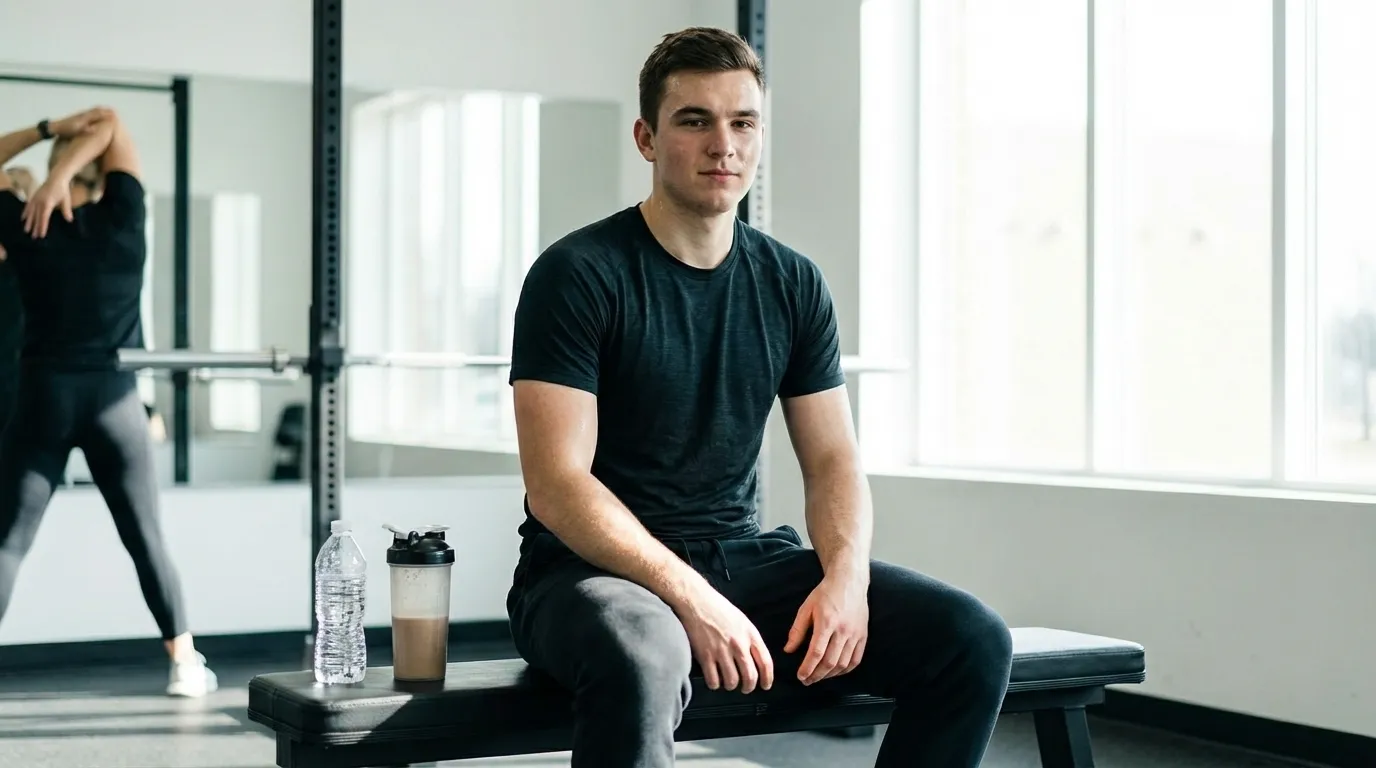
Post-workout (within 60 mins): Fast-digesting protein and some carbs. A protein shake with a banana, or chicken and white rice, are both solid choices.
Daily protein target: Aim for 0.7–1g of protein per pound of bodyweight. This is the non-negotiable number for muscle growth and recovery.
Stay hydrated: Drink water consistently throughout the day, not just during training. Even mild dehydration significantly impacts strength and focus.
What to Do After Your First Gym Session
Recovery starts the moment you leave the gym. You've given your muscles a stimulus — now it's time to let them adapt. Muscle soreness in the 24–48 hours after your first session is normal — it's called DOMS (delayed onset muscle soreness) and it's a sign your body is adapting. Here's how to recover right:
Sleep 7–9 hours. This is when muscle protein synthesis peaks and actual growth happens. No sleep, no gains — it's that simple.
Eat your protein. Don't let hunger or laziness shortchange your recovery. Your muscles need amino acids to rebuild.
Light activity on rest days helps. A 20-minute walk or easy bike ride on your off day speeds up recovery without adding stress.
Schedule your next session. Momentum is everything in the early weeks. Book day two before the soreness convinces you to take a week off.
How to Keep the Momentum Going After Day One
The hardest part isn't the first session — it's sessions two, three, and four. The guys who build the physiques worth having aren't more talented. They just showed up consistently when motivation faded. Progressive overload — gradually increasing the weight or reps over time — is the mechanism behind every aesthetic physique you've ever admired. Track your lifts, add a little more each week, and the results will follow.
Aim for 3 full-body sessions per week in your first month. As your technique improves and your body adapts, you can shift to a push-pull-legs or upper-lower split. But right now, consistency beats complexity every single time. Show up. Do the work. Stack the sessions.
FAQ
What should a beginner do on their first day at the gym?
How heavy should a beginner lift on day one?
Is it normal to feel sore after your first gym session?
How many days per week should a beginner train?
What should I eat before going to the gym for the first time?
Related Intel
View All
Skinny Guy Bulking Guide (Step-by-Step).
A practical step-by-step bulking plan for skinny men who want to build real muscle size without gaining unnecessary fat.
Why Your Abs Aren’t Showing (And How to Fix It)
Uncover the real reasons your abs are hidden and learn the practical steps to reveal them.
Common Gym Mistakes That Sabotage Your Results
Stop wasting your time and effort by avoiding these critical gym mistakes that are keeping you from building the physique you want.