Chest Workout at the Gym
Build a bigger, stronger chest with this complete gym chest workout. Proven exercises, sets, and tips for men who want real results fast.
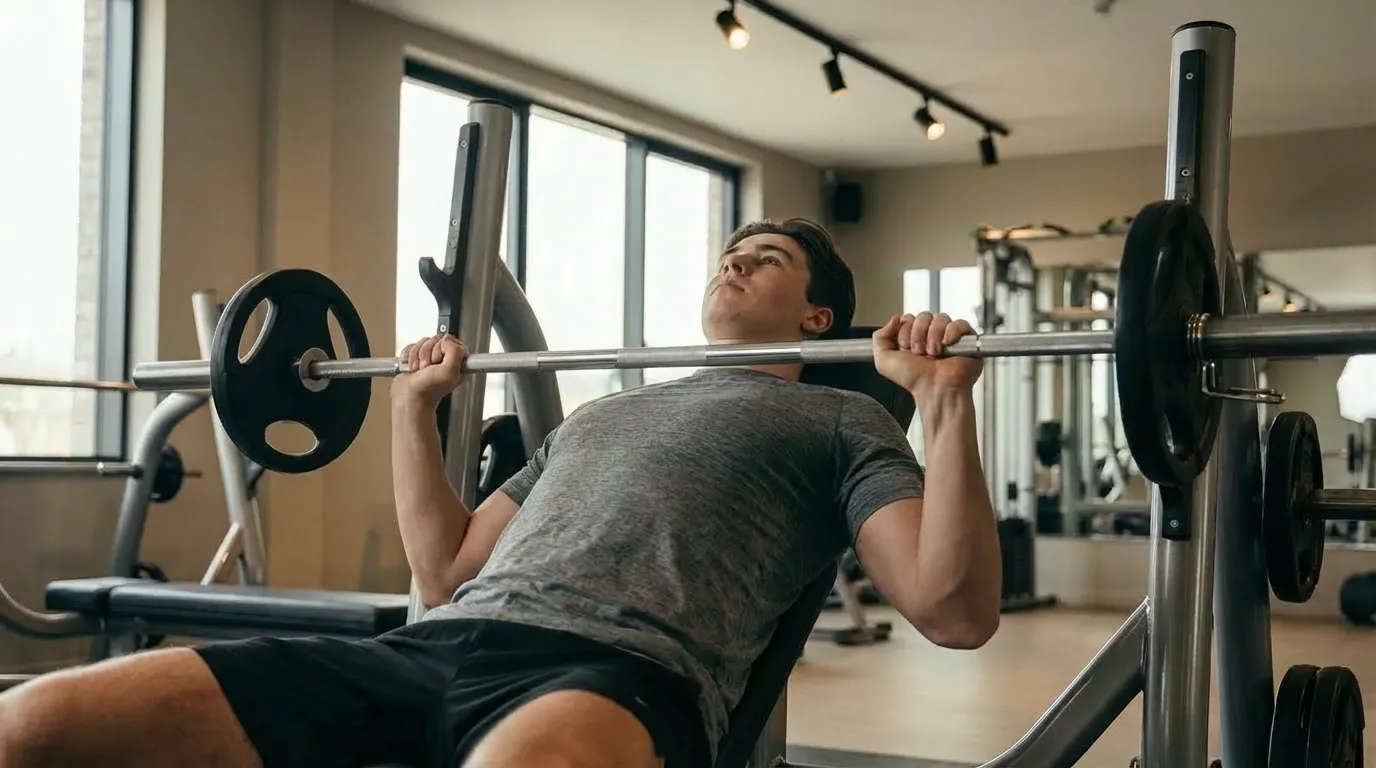
A chest workout at the gym targets the pectoral muscles using free weights, cables, and machines to build size, strength, and definition. The chest is one of the most trainable muscle groups, responding quickly to progressive overload and varied movement patterns. Whether you want a thicker upper chest or more overall mass, the right gym program delivers measurable results.
Chest Muscle Anatomy: What You're Actually Training
The chest is made up of two primary muscles: the pectoralis major and pectoralis minor. The pec major is the large fan-shaped muscle responsible for most of the chest's visible size. The pec minor sits underneath and assists in shoulder stability.
The pec major has two functional heads: the clavicular head (upper chest) and the sternal head (lower and mid chest). Targeting both with varied incline angles ensures complete chest development.
Benefits of a Dedicated Chest Day at the Gym
Builds significant upper body mass and improves physique aesthetics
Increases pressing strength for bench press and overhead movements
Improves shoulder stability and reduces injury risk when trained correctly
Enhances performance in sports requiring pushing, throwing, or contact
Boosts confidence through visible, measurable muscle development
The Best Chest Exercises at the Gym
Not all chest exercises are equal. The best movements combine heavy mechanical tension with a full range of motion across different angles. These are the exercises that consistently deliver the most chest muscle activation.
Compound Pressing Movements
Flat Barbell Bench Press — the cornerstone of chest mass and overall pressing strength
Incline Barbell Bench Press — targets the clavicular head for a full, rounded upper chest
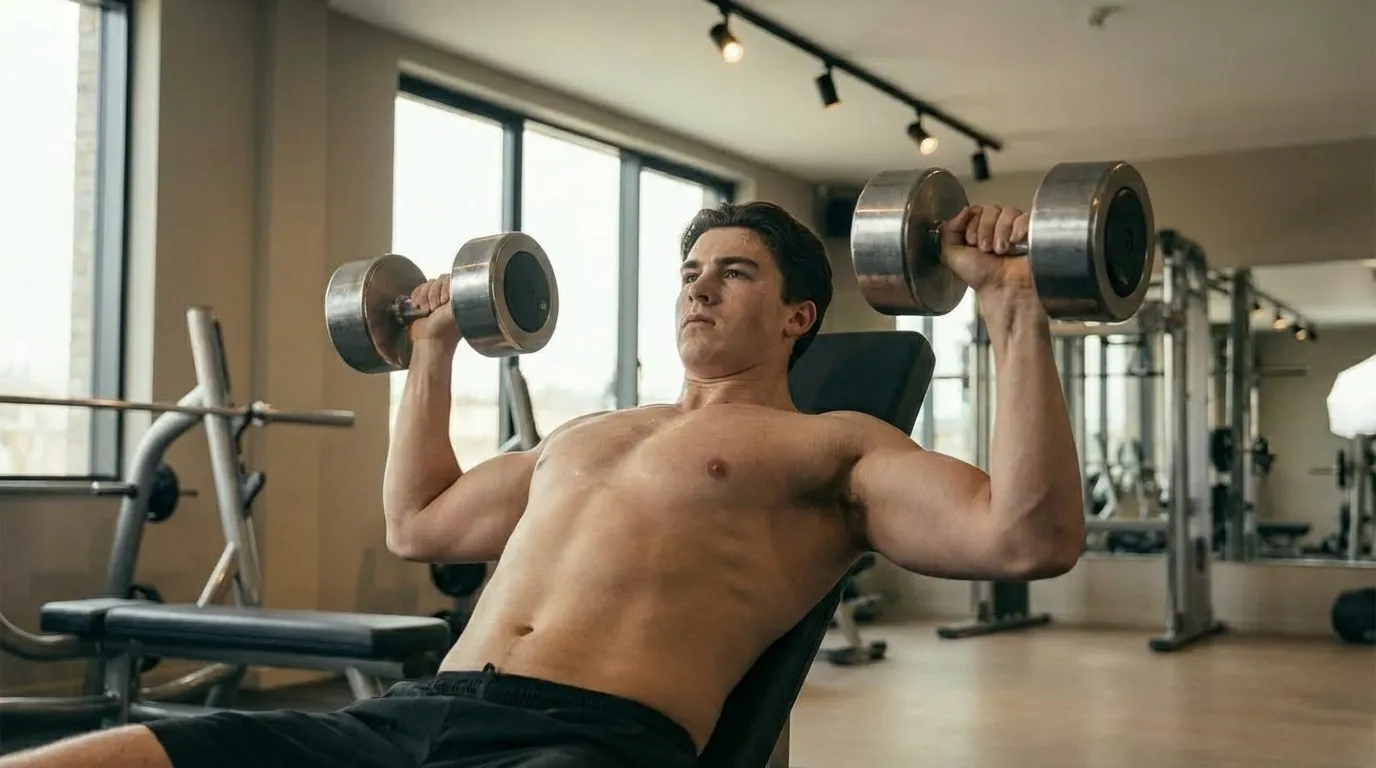
Incline Dumbbell Press — greater range of motion, corrects left-right muscle imbalances
Flat Dumbbell Press — increased stretch at the bottom, excellent for hypertrophy
Isolation and Cable Movements
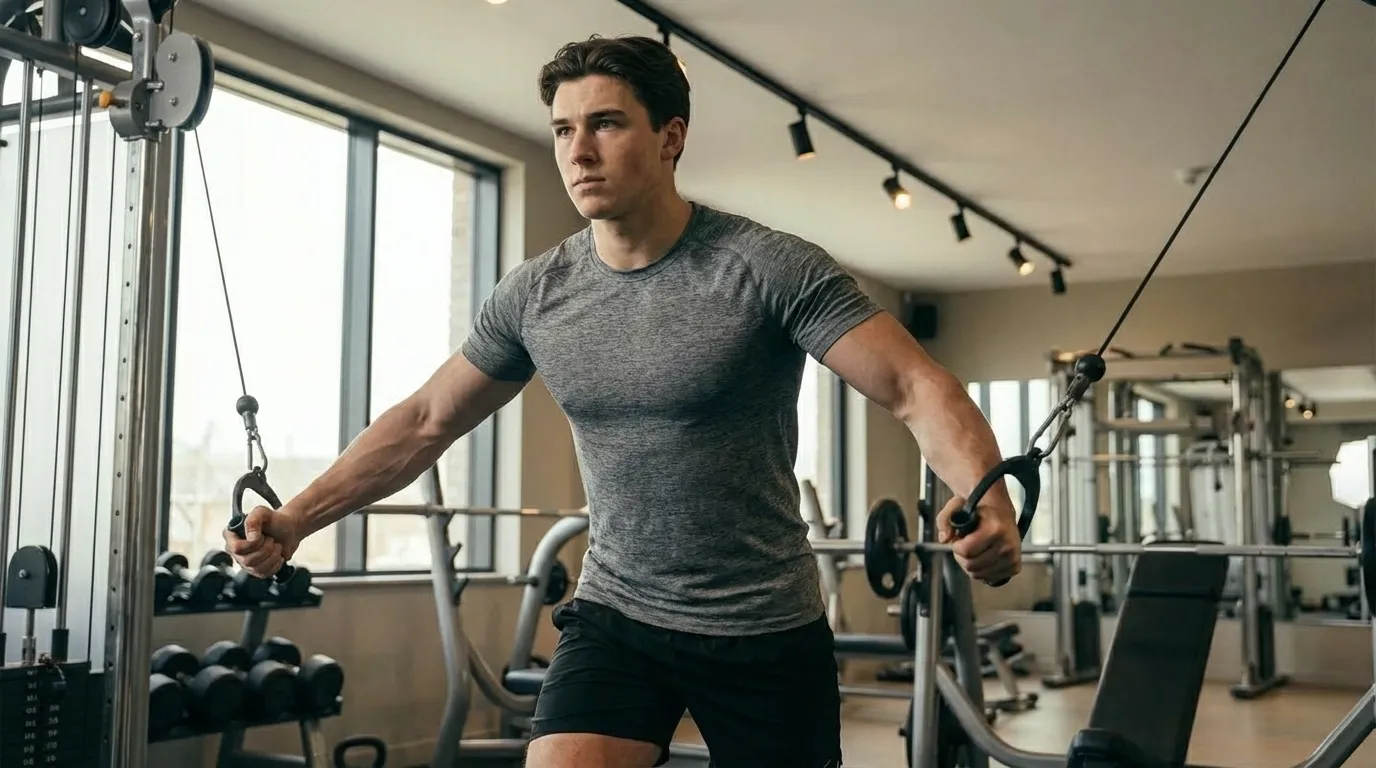
Cable Chest Fly (low-to-high) — constant tension through the full range of motion
Pec Deck Machine Fly — isolates the pecs without stabilizer fatigue
Dumbbell Pullover — stretches the pec minor and expands the chest wall
Chest Dips — weighted dips hit the lower chest with compound strength
Complete Chest Workout Plan for the Gym
This workout is structured using compound movements first, isolation last. Train chest once or twice per week with at least 48 hours recovery between sessions.
Flat Barbell Bench Press — 4 sets x 5–8 reps (heavy strength focus)
Incline Dumbbell Press — 3 sets x 8–12 reps (upper chest hypertrophy)
Flat Dumbbell Fly — 3 sets x 10–15 reps (stretch and mid-chest isolation)
Cable Low-to-High Fly — 3 sets x 12–15 reps (upper chest cable tension)
Pec Deck Machine — 2 sets x 15–20 reps (pump and finisher)
Rest 2–3 minutes between heavy compound sets. Rest 60–90 seconds between isolation exercises. Total session time should be 45–60 minutes.
How to Progress Your Chest Workout Over Time
Progressive overload is the single most important driver of chest growth. Without consistently increasing demands on the muscle, development stalls regardless of effort.
Add 2.5–5 kg to the barbell bench press every 1–2 weeks when rep targets are met with good form
Increase dumbbell weight by one increment once you consistently hit the top of the rep range
Track every set and weight in a training log to monitor progress week over week
Cycle between volume phases (higher reps) and strength phases (lower reps) every 6–8 weeks
Common Chest Training Mistakes to Avoid
Neglecting the incline angle — most men overtrain the flat press and have an underdeveloped upper chest
Using too much weight with poor form — partial reps and shoulder compensation reduce chest activation significantly
Skipping the full range of motion — stopping short at the bottom eliminates the stretch reflex that drives hypertrophy
Not warming up the shoulder joint — always perform 2 light warm-up sets before loading heavy on pressing movements
Training chest too frequently without recovery — muscle is built during rest, not during the workout itself
Nutrition Tips to Support Chest Muscle Growth
Training stimulus alone does not build muscle. Protein intake and caloric surplus are the nutritional requirements that allow the chest to grow after training stress.
Consume 1.6–2.2g of protein per kg of bodyweight daily for optimal muscle protein synthesis
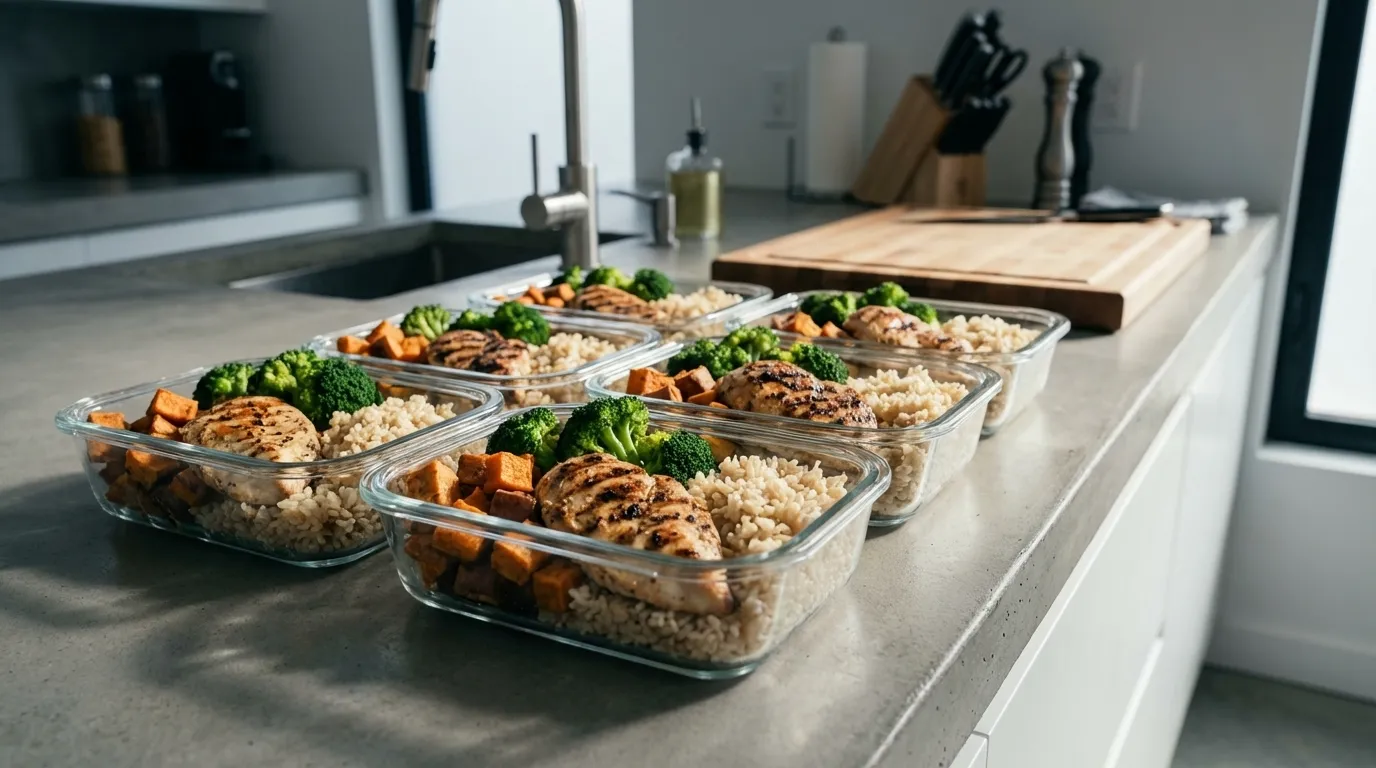
Eat a protein and carbohydrate meal 1–2 hours before training — chicken and rice, eggs and oats, or Greek yogurt with fruit
Post-workout meal within 90 minutes: lean protein source with complex carbs — steak and sweet potato, protein shake and banana
Maintain a slight caloric surplus of 200–400 calories above maintenance to support consistent muscle gain
How Often Should You Train Chest at the Gym?
For most men, training chest 1–2 times per week produces optimal hypertrophy results. Beginners build well on one session per week. Intermediate and advanced lifters benefit from two sessions with different emphases — one heavy strength session and one moderate-volume hypertrophy session.
Aim for 12–20 total working sets per week spread across your chest training days. More volume than this without adequate recovery leads to overtraining and diminishing returns.
FAQ
How many times a week should I train chest at the gym?
What is the best chest exercise at the gym for building mass?
Why is my upper chest not developing?
Should I use dumbbells or a barbell for chest workouts?
How long should a chest workout at the gym take?
Related Intel
View All
Full-Body Workout Routines for Busy Guys
Effective full-body workout plans designed for maximum results with a minimal time commitment.
Calisthenics for Lean Muscle: A Complete Guide
Build a ripped, functional physique using nothing but your own bodyweight with this complete guide to calisthenics.
Complete Shoulder Workout for Bigger Delts
Build wider, rounder delts with this complete shoulder workout. Discover the best exercises, rep ranges, and tips for an aesthetic V-taper physique.