Why Diet Matters More Than Ab Workouts
Ab workouts build muscle, but diet reveals it. Learn why nutrition is the real key to a visible six pack and how to eat for results.
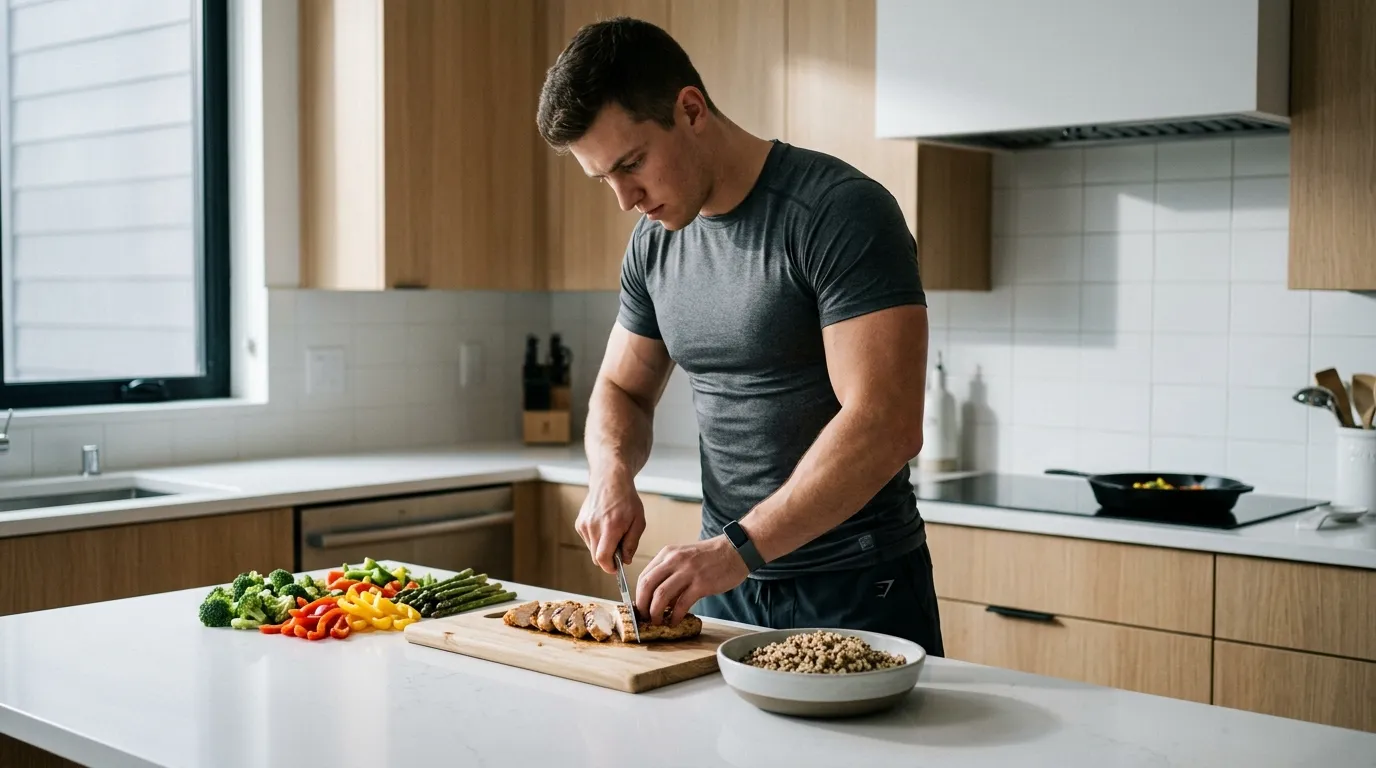
Ab workouts build and strengthen the rectus abdominis — but they do not reveal it. The visibility of your six pack is determined almost entirely by how much body fat sits over those muscles. No amount of crunches, leg raises, or planks will burn the layer of fat covering your abs. Diet is the tool that does that job, and understanding why is the first step toward actually getting the results you have been training for.
The Core Truth: You Can't Out-Train a Poor Diet
A 20-minute ab workout burns roughly 150–200 calories. A single carelessly eaten meal can easily exceed 1,000 calories. The math is not in favor of training your way out of a bad diet. This is why two men can follow the exact same ab workout program and get completely different results based solely on what they eat.
The phrase "abs are made in the kitchen" exists because it is physiologically accurate. Fat loss — the mechanism that exposes your abs — is driven primarily by a sustained caloric deficit, not by exercise volume. You can have the most developed, strongest core in the gym and still show zero definition if your body fat remains too high.
This is not a knock on training. It is a clarification of roles. Training builds the muscle. Nutrition uncovers it. Once you fully internalize that distinction, your approach to getting a visible six pack becomes far more focused and far more effective.
What Ab Workouts Actually Do — and What They Don't
Ab training is genuinely valuable — but its role is widely misunderstood, and that misunderstanding is exactly why so many men spend months doing daily core work with nothing to show for it. Dedicated core work builds muscle thickness, improves spinal stability, enhances athletic performance, and increases the depth and sharpness of your abs once body fat is low enough to reveal them.
Think of it this way: ab workouts build the sculpture. Diet removes the cover. Without both, you either have a well-developed core hidden under fat, or a lean midsection with shallow, underdeveloped definition lines. The goal is to have both — and that starts by getting your nutrition right first.
What ab training does not do:
Burn significant amounts of belly fat — the caloric burn is too low to make a meaningful dent
Spot-reduce fat from the midsection — fat loss is systemic, not localized
Compensate for a caloric surplus — no workout frequency overcomes consistent overeating
Create visible definition on its own at high body fat — muscle under fat is invisible regardless of how developed it is
How a Caloric Deficit Reveals Your Abs
When you consistently consume fewer calories than your body burns, it turns to stored body fat for energy. Over time, this process reduces the subcutaneous fat layer sitting directly over your abdominal muscles. As that layer thins progressively, the muscle definition underneath becomes visible — first faintly, then sharply as body fat drops further.
For most men, abs begin to show at around 12–14% body fat. A sharp, clearly defined six pack typically requires reaching 8–11%. The exact threshold varies slightly based on genetics and how developed the ab muscles are, but the principle is universal: lower body fat equals greater visibility.
A 300–500 calorie daily deficit produces approximately 0.5–1 pound of fat loss per week. This is the optimal range for preserving lean muscle while consistently reducing body fat. Going more aggressive accelerates muscle loss, tanks your energy levels, and often leads to rebound eating that erases progress.
Why Protein Is the Most Important Macronutrient for Abs
Protein is the single most important macronutrient when your goal is a visible, defined midsection. It serves three critical functions simultaneously: it preserves lean muscle tissue during a caloric deficit, it suppresses hunger more effectively than carbohydrates or fats, and it has the highest thermic effect of food — meaning your body expends more calories digesting and processing it.
Studies consistently show that high-protein diets during a cut result in greater fat loss and better muscle retention compared to lower-protein approaches at the same calorie intake. The difference in body composition outcomes is significant enough that protein intake should be the first nutritional variable you lock in before adjusting anything else.
Target 0.8–1g of protein per pound of bodyweight daily. For a 180-pound man, that is 144–180g of protein every day. High-protein foods to build your diet around include:
Chicken breast — approximately 31g protein per 100g, low fat, highly versatile
Egg whites — approximately 11g protein per 100g, near-zero fat and carbohydrates
Lean ground turkey — approximately 27g protein per 100g, easy to meal prep in bulk
Canned tuna — approximately 25g protein per 100g, cost-effective and convenient
Salmon — approximately 25g protein per 100g, with added omega-3 anti-inflammatory benefits
Greek yogurt — approximately 10g protein per 100g, useful for hitting protein targets between meals
Cottage cheese — approximately 11g protein per 100g, slow-digesting casein protein ideal before sleep
Whey protein — approximately 25g protein per scoop, fast-digesting and ideal post-workout

Carbohydrates and Fats: Where They Fit in an Ab-Revealing Diet
Carbohydrates and dietary fat are not enemies — but both need to be managed carefully in a caloric deficit. Carbohydrates are your primary fuel source for training performance. Keeping them moderate and strategically timed around workouts allows you to train hard while remaining in a deficit. Removing them entirely tends to kill training intensity, reduce muscle fullness, and make the diet unsustainable.
Best carbohydrate sources for an ab-revealing diet:
White rice and oats — easily digestible, great pre and post-workout
Sweet potatoes — nutrient-dense, high fiber, moderate glycemic index
Fruit — natural sugars with fiber, vitamins, and high satiety
Fibrous vegetables — broccoli, spinach, peppers, and courgette add volume with minimal calories
Dietary fat supports testosterone production, joint health, and fat-soluble vitamin absorption — all critical when cutting. Keep fat intake at 0.3–0.5g per pound of bodyweight and prioritize unsaturated sources like olive oil, avocado, nuts, and fatty fish. Remaining calories after protein and fat targets are set should come from carbohydrates.
Foods That Silently Sabotage Visible Abs
Many men eat reasonably well during the week but unknowingly consume enough calories on weekends to cancel their entire weekly deficit. The most common hidden calorie sources are not junk food — they are everyday additions that seem harmless individually but accumulate into hundreds of untracked calories daily.
Alcohol — 7 calories per gram, zero nutritional value, and directly suppresses fat oxidation for up to 24 hours after consumption
Cooking oils — 100–120 calories per tablespoon; two tablespoons used when cooking can add 200+ untracked calories
Condiments and sauces — ketchup, BBQ sauce, peanut butter, and salad dressings can add 100–400 hidden calories per meal
Liquid calories — fruit juices, sports drinks, flavored coffees, and protein shakes with added ingredients
Oversized portions of calorie-dense healthy foods — nuts, avocado, olive oil, and granola are nutritious but easy to over-consume
Weekend social eating — restaurant meals, takeaways, and social drinking can easily undo five days of disciplined eating in two days
The Impact of Sodium and Water Retention on Ab Definition
Even men at relatively low body fat can look soft and undefined due to chronic water retention. High sodium intake from processed foods causes the body to hold excess water subcutaneously — directly under the skin over your muscles. This blurs definition lines and makes lean tissue appear flat and smooth instead of sharp and striated.
To reduce water retention and improve daily muscle definition:
Drink 3–4 liters of water daily — consistent hydration paradoxically reduces water retention
Limit sodium to under 2,300mg per day by reducing processed, canned, and restaurant foods
Increase potassium-rich foods — bananas, sweet potatoes, spinach, and avocado help balance sodium levels
Reduce alcohol consumption — alcohol causes significant water retention and bloating
Manage cortisol through consistent sleep and stress reduction — high cortisol elevates aldosterone, a hormone that drives water retention
How Sleep and Stress Affect Your Diet and Ab Visibility
Sleep deprivation and chronic stress are nutritional saboteurs that most men overlook. When you sleep under 6 hours per night, cortisol rises sharply and ghrelin — the hunger hormone — spikes significantly. The result is that you are hungrier, less satisfied by food, and more likely to overeat the following day. Studies show that men sleeping 5–6 hours consume an average of 300–500 more calories daily compared to those sleeping 7–9 hours.
Additionally, elevated cortisol from both poor sleep and chronic stress promotes fat storage specifically around the midsection. This is a physiological response — your body preferentially deposits fat near the abdominal organs when under chronic stress. Addressing sleep and stress is not a lifestyle bonus. It is a direct component of your ab-revealing nutrition strategy.
A Full Day of Eating for Visible Abs
Below is a practical example daily structure for a 180-pound man in a 400-calorie deficit, targeting approximately 2,000–2,100 calories with high protein. This is not a rigid prescription — it is a framework to illustrate what a structured, results-focused eating day looks like in practice.
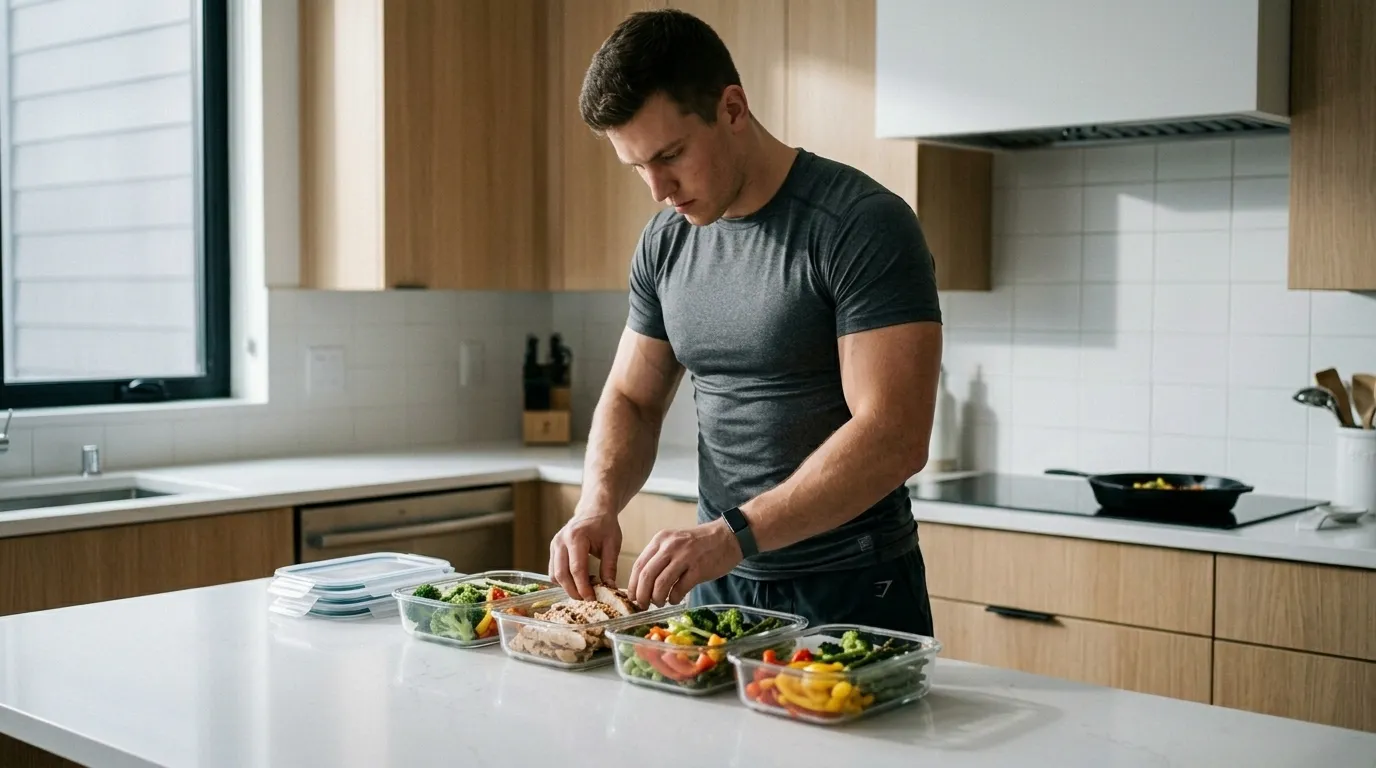
Breakfast: 5 egg whites plus 2 whole eggs scrambled, 80g oats with water and cinnamon, black coffee — approximately 520 calories, 42g protein
Mid-morning snack: 200g Greek yogurt with 100g mixed berries — approximately 160 calories, 18g protein
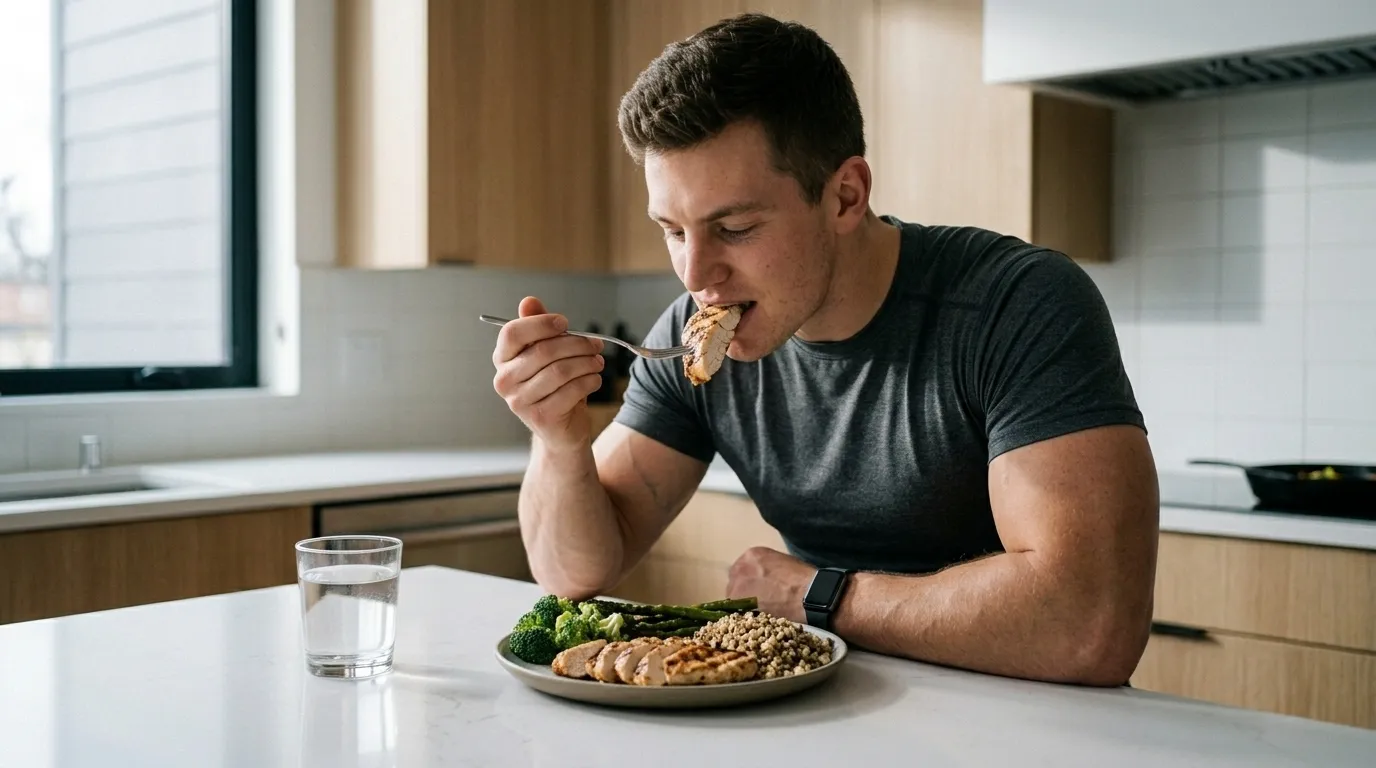
Lunch: 200g grilled chicken breast, 140g white rice cooked, large mixed salad with 1 tablespoon olive oil and lemon — approximately 580 calories, 48g protein
Pre-workout: 1 banana and 1 scoop whey protein with water — approximately 220 calories, 27g protein
Dinner: 200g lean ground turkey cooked with spices, large portion of roasted vegetables, 120g sweet potato — approximately 480 calories, 38g protein
Evening: 150g cottage cheese — approximately 130 calories, 18g protein
Daily totals for this structure approximate 2,090 calories and 191g of protein — well above the 144g minimum target for a 180-pound man. This leaves room for minor adjustments while keeping protein consistently high.
Meal Timing: Does It Matter for Getting Abs?
Meal timing is a secondary factor compared to total daily caloric intake and macronutrient targets — but it still has meaningful practical benefits. Distributing protein across 4–5 meals throughout the day maximizes muscle protein synthesis compared to concentrating most of it in one or two large meals. Spacing meals 3–4 hours apart also helps manage hunger more effectively during a deficit.
Placing your largest carbohydrate servings around training — pre-workout and post-workout — optimizes energy availability and glycogen replenishment without promoting fat storage. Reducing carbohydrates in the evening when activity levels drop is a simple structural adjustment that many men find helps maintain a deficit more comfortably.
Intermittent fasting can also work for some men as a structure that makes eating within a caloric deficit easier to maintain. The key is that total daily calories and protein are what drive results — not the specific window in which you eat them. Choose the meal timing structure you can adhere to most consistently.
How to Use Ab Training Alongside Your Nutrition Plan
Once your nutrition is structured correctly, ab training takes on its proper supporting role. Train your abs 2–3 times per week with exercises that apply progressive overload. This ensures that as the fat layer reduces, the muscle emerging beneath it is thick, developed, and visually impressive.
An effective weekly ab training structure:
Cable crunches: 3–4 sets of 12–15 reps — primary weighted flexion movement
Hanging leg raises: 3 sets of 10–12 reps — lower ab and hip flexor development
Weighted decline sit-ups: 3 sets of 10–12 reps — upper ab thickness and development
Ab wheel rollouts: 3 sets progressing to full extension — anti-extension core strength
Pallof press: 3 sets of 12 reps each side — rotational stability and oblique development
Compound lifts like squats, deadlifts, and overhead presses also engage the core intensely under load — so even on days you do not train abs directly, your core is being stimulated. This combination of direct ab work and heavy compound training produces the most complete, functional, and visually developed midsection.

The Right Balance: Diet First, Ab Training Second
This is not a case for abandoning ab workouts. It is a case for correctly assigning priority. Spend 80% of your focus on getting your nutrition dialed in — your caloric deficit, protein intake, food quality, sodium management, sleep, and consistency. Spend 20% on building the ab muscles that your nutrition will eventually uncover.
The most efficient path to a visible six pack combines a disciplined caloric deficit with 2–3 weekly resistance-based ab sessions and a high-protein diet sustained over several months. Both elements working together — not one replacing the other — produce the result every man training for abs is ultimately after.
Every man with a visible, well-defined six pack solved the nutrition problem first. The training followed. Get the sequence right, stay consistent for long enough, and the results are not a matter of if — they are a matter of when.
Key Takeaways
Fat loss — not ab training — is what makes abs visible; diet drives fat loss
A 300–500 calorie daily deficit is the proven sustainable fat loss range for preserving muscle
Protein intake of 0.8–1g per pound of bodyweight is the most important nutritional variable during a cut
Hidden calories in alcohol, cooking oils, sauces, and weekend eating are the most common deficit killers
Sodium management, sleep quality, and stress reduction directly impact how lean and defined your midsection appears
Ab workouts develop the muscle beneath the fat — nutrition is what uncovers it
Prioritize diet first, train abs 2–3 times per week, and sustain both for at least 8–16 weeks to see real results
FAQ
Is diet really more important than exercise for getting abs?
What should I eat to get a six pack?
How many calories should I eat to lose belly fat?
Can I still do ab workouts while in a caloric deficit?
How long will it take to see abs if I fix my diet?
Related Intel
View All
Skinny Guy Bulking Guide (Step-by-Step).
A practical step-by-step bulking plan for skinny men who want to build real muscle size without gaining unnecessary fat.

Why Your Abs Aren’t Showing (And How to Fix It)
Uncover the real reasons your abs are hidden and learn the practical steps to reveal them.

Common Gym Mistakes That Sabotage Your Results
Stop wasting your time and effort by avoiding these critical gym mistakes that are keeping you from building the physique you want.